

For years, B2B sales development relied on brute force: hiring offshore SDR teams to send generic mass emails, manually copying data between spreadsheets, and buying static lead lists that went stale within weeks.
In 2026, that playbook is officially obsolete. Outbound conversion rates for traditional spray-and-pray emails have plummeted, while deliverability filters have strictly tightened.
To maintain pipeline growth, high-performing revenue teams have transitioned to AI-Native Outbound Engineering. Below is the exact architectural blueprint we use at Symphony GTM to build automated, signal-driven sales engines.
The 4-Layer AI Outbound Architecture
Instead of treating sales tech as a disconnected collection of tools, modern GTM systems operate as a unified, automated data pipeline built across four distinct layers:
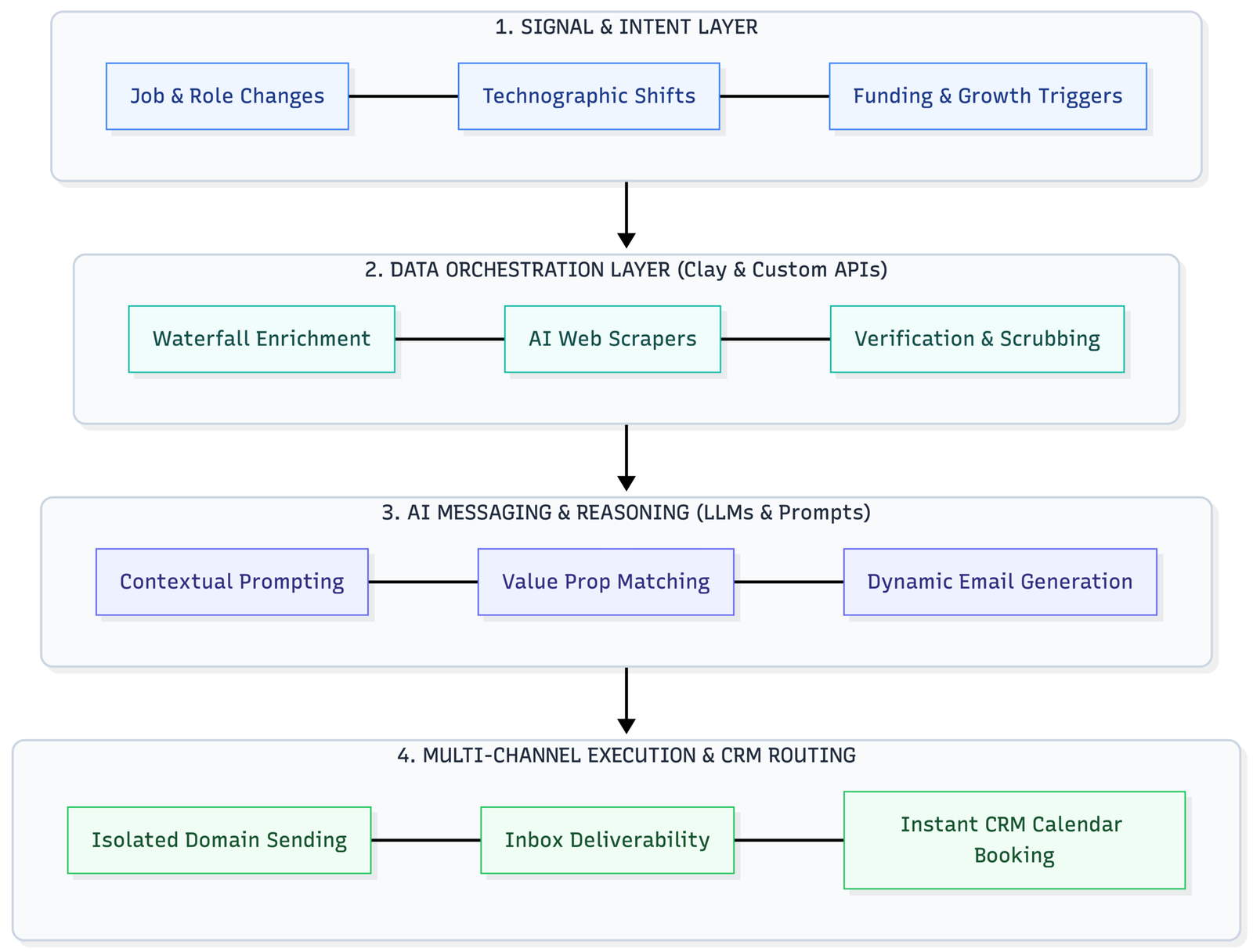
Layer 1: Signal & Intent Capture
Top-performing outbound starts with timing. Rather than reaching out cold, we monitor real-time buying signals:
- Leadership & Role Changes: Identifying newly appointed executives within their first 90 days.
- Technographic Shifts: Detecting when a target account installs or drops competing software tools.
- Growth Triggers: Capturing fundraising rounds, localized hiring sprees, or new office openings.
Layer 2: Automated Data Orchestration (Clay & API Workflows)
Once a signal is triggered, manual research is replaced by automated enrichment pipelines:
- Waterfall enrichment across multiple data vendors to maximize email and phone number accuracy.
- Custom AI web scraping agents that visit target company websites, review job descriptions, and extract relevant contextual data points.
Layer 3: Contextual AI Messaging
Generative AI should never send unedited, generic pitch emails. Instead, LLM workflows are configured with strict guardrails:
- Conditional Logic Prompts: Synthesizing scraped research into specific, relevant observations.
- Dynamic Value Proposition Matching: Pairing the prospect’s observed pain point directly with your corresponding case study or solution angle.
Layer 4: Infrastructure & Multi-Channel Execution
Delivering the right message requires clean domain infrastructure and automated workflow routing:
- Secondary Domain Isolation: Protecting your primary corporate domain reputation by spreading outbound volume across isolated, warmed secondary domains.
- Smart Lead Routing: Instantly qualifying incoming replies and booking them directly onto native sales reps’ calendars via automated CRM synchronization.
The Results: Efficiency & Conversion Benchmarks
By replacing manual sales development workflows with a modern GTM engine, enterprise teams experience dramatic performance improvements:
| Metric | Traditional SDR Approach | AI-Native Outbound Engine |
| Research Time / Lead | 10–15 Minutes (Manual) | < 2 Seconds (Automated) |
| Email Deliverability | 60% – 75% | 95%+ |
| Positive Reply Rate | 0.5% – 1% | 3% – 7%+ |
| Cost per Qualified Demo | $500 – $1,200 | $150 – $350 |
Executive Takeaway
Building an automated outbound engine isn’t about replacing human connection—it’s about removing low-value manual overhead so your team can focus exclusively on high-value closing conversations.